Thursday, August 16, 2012

Big Bear: not just another pretty face

Glenbow File number: NA-1010-24
Title: Big Bear, Cree.
Date: 1885
Big Bear was not known as a handsome fellow.  His biographer Hugh Dempsey notes that, "even when he was young, Big Bear was not a good-looking person, and the smallpox scars made him even homelier." (Dempsey, Big Bear, 1984, p. 18)  Our best known images of Big Bear are those surrounding the 1885 North-West Rebellion in a stage when the Cree chief, while still able to keep up with the best of them, was sixty years old.  Having seen his fair share of violence, starvation, and just plain hardy living, he admittedly looks like someone who has spent his days on the windswept and sunbeaten prairie.

The Cree chief was apparently no narcissist, and would often make fun of his appearance. An incident in the early 1880s shows that Big Bear had a good sense of humour about it all.  Walpole Roland, a photographer that wanted to take the chief's picture, was taken aback by the exorbitant demands for provisions from his prospective model.

Roland noted, "After giving him some presents, I said I could not afford so much; that he was reversing the order of things seriously, and further that I would try and find, if possible, a more repulsive-looking Indian between here and the Rockies and call him Big Bear.  At this he laughed very heartily and, wishing me good day, gave me a parting shot by adding that I would probably go beyond the Rockies to find his rival in ugliness." (Dempsey, p. 117)  Roland concluded that he had met the most stubborn chief on the prairies.  The judgement is in keeping with a leader who refused to take treaty, demanded better terms, and stalled on the selection of his reserve for many years. 

"Crow" D.F. Barry
Pictures or portraits of Big Bear in his youth are rare, if not non-existent.  One picture that is identified as the chief, appears to be a case of shoddy journalism, mistaken identity, and a pinch of colonial racism.  The original of the offending picture has been recently sold by auction, and identified as photographer D. F. Barry's "Crow". On the back of the photograph was pencilled, "Crow" - also called Pispisa Ho Waste (Good Voice Prairie Dog)". Barry travelled the American West in the 1870s and 1880s and is famous for capturing iconic pictures of the American frontier. A host of his photographs have been digitized in the Denver Public Library.  In a 1921 interview,a Lakota elder Elk was shown the photograph and described it thus:  
the man, Crow, whose picture you show me, wears those things in his hair. They are stripped feathers. He was shot by two arrows once. He pulled them both through. He did not break them off. So he can wear the quill of the eagle's feathers for each one.
Users of the internet forum American-Tribes have identified an earlier misconstruction of the Barry photo as Big Bear in The Graphic illustrated magazine.  This may be the original case of swapped identity, but could be that the Canadian Illustrated News ran these graphics first, as the McCord-Museum has them listed as the work of John Henry Walker (1831-1899), who sold his etchings to that journal.

One gets the feeling the north-west rebellion was good news in 1885, and editors were fine with running the picture of any aboriginal man who looked suitably exotic enough to impress their readers.  The portrait of "Poundmaker" on the far left has been suggested to be "Bad Soup", perhaps of the Blackfoot tribe.
Big Bear from Gowanlock's "Two Months..."
Curiously, the publication of Frog Lake "Massacre" survivor Theresa Gowanlock's memoir of her, "Two Months in the Camp of Big Bear", has a portrait of Big Bear, which appears to have been altered from the D.F. Barry cabinet portrait.  All of this misrepresentation boggles the mind. While further investigation is needed to confirm these identities, the phenomenon points to a shared American-Canadian construction of the "Indian" which hinges on the sensationalism of military reportage and a demand for images in a time when photography was in its infancy.  Historians should have picked up on the mistaken identity long ago.  "The Crow" is clearly a handsome chap!

Friday, August 10, 2012

Of Meteors, McDougalls and Manitou

A 2012 controversy over the question of repatriation of a meteorite considered sacred to Alberta First Nations is making headlines. Members of the Blue Quills First Nation are considering creating a ceremonial space which houses the meteorite should they be able to gain access to the 386 pound chunk of iron.  The meteorite is held today at the Royal Alberta Museum, where it was repatriated from collections in Ontario.  The Methodist roots of what was once Victoria College are the key to how it arrived there.
Glenbow Image No: NA-789-148
Title: Reverend Thomas Woolsey.

The earliest written report of the meteorite was made in 1810 by Alexander Henry the Younger, who noted the placename "Iron Stone".  It wasn't until 1860 when the Methodist Reverend Thomas Woolsey wrote a descriptor of the stone itself:

When with the Crees last August, I visited the locality renowned for having a large piece of iron there.  In fact, an adjoining lake and a rivulet bear the respective designations of Iron Lake and Iron Rivulet.  Well, there the iron is, as pure as possible and as sonorous as an anvil, and weighs, I should judge 200 lbs.  It is on the summit of a mound but whether it is a metoritic phenomenon or indicative of iron in that section, I cannot say.  (Southesk, 1875 as cited in Spratt, "Canada's iron creek meteorite", Journal of the Royal Astronomical Society of Canada 1989. )
One supernatural aspect of the stone was its professed ability to grow in size.  Writing in 1865, explorer Walter Butler Cheadle was told that the stone was the size of a fist when it was first put atop the hill, but could no longer be lifted.


"Manitou Stone"  Aaron Paquette. Print: Society6
The stone itself was considered to have been placed on a hill by the Ojibwa spirit Nanebozo close to the Battle River near present day Hardisty.  Some say one can see the face of Manitou (or the Great Spirit) on its surface.  The stone was said to have protective powers, especially over the buffalo and local aboriginals.  Hugh Dempsey notes in Big Bear: End of Freedom (1984) that offerings were left by the stone when the Cree left for the hunt. (Dempsey, p.37)

Unfortunately for the Cree, in 1866, the Methodist Reverends George and John McDougall decided to take this object of worship from its resting place by the Battle.  George McDougall noted that "for ages the tribes of Blackfeet and Crees have gathered their clans to pay homage to this wonderful manitoo." (Dempsey, p.38)  The McDougall's took the stone to Victoria Settlement.  One account notes that they used it as a part of the church's foundation, but others recall it lying in the church yard. Until this time the missionaries were largely tolerated, but Dempsey notes that the taking of the stone was the beginning of grave doubts about the intentions of the newcomers.

Medicine men predicted sickness, war and starvation, as a result of the removal of the guardian of the buffalo.  By 1873, all had come to pass. (Dempsey, 52).  It has also been suggested that George McDougall would suffer for moving the rock, and that his loss of three children to smallpox the next year was his penance.  Just which McDougall actually removed the stone, seems to be in question.  Sir William Francis Butler wrote in 1872 that David McDougall, a trader son of George's removed the stone.
Glenbow File number: PC-242-1
Title: Reverend George McDougall,
 Methodist missionary.
Date: [ca. 1860s]

After around 15 years at Victoria Settlement (now Pakan, Alberta), the Stone was sent east to the Methodist Victoria College, in Cobourg, Ontario where it adorned a hall.  It found its way to the Royal Ontario Museum, and in the 1970s was repatriated to the Royal Alberta Museum.


The meteorite is the third-largest to be found in Canada, and theories suggest that it is merely a piece of a much larger rock.  One rumour has it that the First Nations buried the rest of the rock so it would not be looted by Euro-Canadians.  The legend of this still remaining meteorite was continued by the Alberta Museum geologist Don Taylor in the 1960s.  Taylor had met with Hardisty local Bill McDonald, who told stories about the stone weighing around 1,500 pounds.  Others presume this to be false and that this larger rock was probably one of the aboriginal rock carvings, called rib-stones, seen in the area.

Various samples have been taken from the rock over the years and were once held in places such as the Smithsonian, the American Museum of Natural History, and the British Museum of Natural History.  Christopher Spratt noted in 1989, that 668.4 grams of the meterorite had been removed, and housed at six museums across Europe and North America.  No mention has been made yet in the media regarding the return of these pieces should the meteor ever leave its home at the museum.

The future of the rock has yet to be decided.  Problems returning the meteorite to one specific First Nation may arise.  Repatriating artifacts sacred to First Nations would not be unprecedented.  The Glenbow Museum has repatriated sacred bundles to the Blackfoot, for example, and loaned parts of its collection out for ceremonial use.  Only time will tell where the Manitou Stone will be headed next, but it is clear that the meteorite, as scientific or sacred object, has aroused interest for over two hundred years.

Thursday, August 9, 2012

Big Bear's vision against Horse Ownership


Big Bear in custody at Regina, 1885.
Credit: O.B. Buell
/ Library Archives Canada / C-001873
Big Bear (1825-1888) was a legendary Cree Chief, whose heritage was both Cree and Ojibwa.  While the Cree, of course, had their own medicine men, the Ojibwa were particularly known for their spiritual abilities.  Big Bear's visions were central to his interpretation of the world around him, and it is said he foresaw the end of the plains peoples' way of life, foretelling times even more troubling that those of frequent epidemic in the early nineteenth-century.

One dream, recounted in Hugh Dempsey's Big Bear: End of Freedom, has been attributed to Big Bear's peculiar stance against acquiring horses.  For the Cree and Blackfoot, horse theft was an art and means to status.  Capturing a herd of thundering horses from one's enemy proved a man's prowess.  Theft was a part of prairie life.  Big Bear, however, while participating in horse raiding, distributed the chargers he acquired to his family and those in need.  Dempsey notes that this was more than just the generosity of a prospective chief, but also "the fulfilment of another vision." (Dempsey, 19)

In a dream a spirit came to Big Bear and led him to a cave filled with horses.  The spirit told him to,
Go to the centre of the herd and take the horse that you find there.  Don't take any other horse, just that one.  The horses will rear up and kick at you, but if you show no fear, they will move aside and let you pass.  But if you show any fear, you won't get to the horse in the middle.  (Dempsey, 19)

Unfortunately when Big Bear neared the middle of the cave, a large black stallion reared up, making at him with its hooves and Big Bear shrunk back in defence.  The herd vanished.  Suddenly alone with the spirit man, he was told, "It's too bad you crouched.  You had your chance but now you'll never be rich in horses as long as you live."
Glenbow Museum and Archives File number: NA-1709-43
Title: Cree people at Poplar Grove [Innisfail]
Date: [ca. 1891]
Big Bear interpreted this to mean that he should never try to accumulate horses, and thereafter only kept as many as he needed for himself.  Dempsey, whose biography of the Cree chief adapted First Nations' stories from numerous reservations in the Canadian West, noted that spirituality was central to Big Bear's life, and that, "he was remembered as much for the supernatural power he possessed as for his political acumen."   His source for Big Bear's horse theft vision come from a 1982 conversation with the Reverend Stan Cuthand.

Monday, July 16, 2012

Canadian Zoot Suiters

12 June 1944 Globe
The zoot suit, was a Second World War fashion trend that begs explanation.  Young men would don what Jeff Keshen describes as "wide-brimmed gangsterish-looking fedoras, long and loose-fitting jackets with padded shoulders, high-waisted baggy trousers pegged at the ankles, and brightly coloured shirts with huge bow ties."  (Keshen,Saints, Sinners and Soldiers,p 207).  During the war in North America, zoot-suiters' wild fashions and spastic swing jazz rhythms were associated with juvenile delinquency and frivolous waste.


Due to wartime controls on dyes and textiles, the very suits themselves were considered unpatriotic.  Keshen notes that the backlash against these bombastic youths had much to do with the panicky press coverage of the 1943 Los Angeles, zoot-suit riot.  Sailors from the Chavez Ravine naval base, doled out some extreme beatings, and tore clothes from the civilian youth, who were perceived to have attacked sailors. 

Canadian press associated zoot suiters with the jitterbug, clearly a spastic expression of loose morals.  Tensions between servicemen and zoot suiters were greatest in Toronto and Montreal.  In the later city, violence was meted out to both sides, spilling over to Verdun, where the Dance Pavilion was raided by mob of 400 sailors.

In the summer of 1943, Toronto servicemen had ripped the clothes off the youngsters and tossed them in the lake.  A Globe and Mail article which predicted the swift end of the fad, patriotically ridicules the outlandishly clad youngsters.  One "youthful veteran of this war" is quoted as a representative of enlisted men:
I know how the servicemen feel.  They have exchanged their civilian clothes for a uniform of which they are very proud.  They feel a lot of these kids wearing the funny clothes should be either in the army, navy or air force.  And when, as was the case at Sunnyside recently, one zoot-suit wearer 'took a crack' at a fellow in army uniform - well what could you expect?"("Zoot Suit's Day Wanes in Opinion of Tailors", Globe and Mail, 12 June 1943, p.5 )
Globe and Mail 19 June 1943, p.3
Interestingly, the same article suggests a First World War parallel to the phenomenon.  A Toronto psychologist is quoted as saying that, "back in 1917 and 1918, all the younger fellows who had not reached army age were making big money in ammunition plants, just as they are today.  They turned to silk shirts with wide, 'noisy' stripes."

Globe and Mail. 6 July 1944. p.3
The Globe and Mail reinforced the moral consensus that the zoot-suiters were juvenile delinquents.  One article chose to report on school-ground bullying to show the moral regressions of these rebellious youths. It is not often that the playground pecking order makes the news!  The response to the trend in wartime Canada shows the strong forces of conformity at work, and the efforts of youth to break from these mainstream norms.


During the 1990s swing revival, the Cherry Poppin' Daddies broke onto the international stage with their hit "Zoot Suit Riot".  The song holds up better than the music video.

Tuesday, July 3, 2012

Patriotic Rye: A Parody of Canada First

Thomas Phillips Thompson LAC C-38581
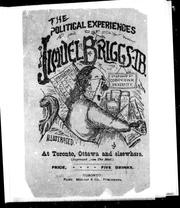
Thomas Phillips Thompson, was a Canadian satirist and social reformer.  In the 1870s, Thompson wrote for Toronto's Telegraph as well as the Mail, where his lampooning of George Brown, the Grits and the Globe would become well known to the readers of the conservative press.  His pseudonym, Jimuel Briggs was used to publish a fictitious autobiography incorporating some of his satirical journalism under the title, The Political Experiences of Jimuel Briggs, D.S., Graduate of Coboconk University. (1873)


His embellishment of Thomas Moss's 1873 attempt at election under a Canada First platform shows that patriotism could extend to the type of alcohol one preferred.  Thompson satirizes the zeal of the Canada First movement, which in 1874 formed the Canadian National Association, a political party which went nowhere.   The scene portrays the founding fathers of the party searching for a Canadian nationalist identity in the bottom of bottle:
There were fully twenty of us involved with the idea of Canadian nationality.  Previous to our proceeding to business, one of those moved that we should wet the New Party, a proposition that was wildly encored.  'I move,' continued he, 'that we order a dozen bottles of Bass, or perhaps the party would prefer some hot Irish whiskey?'
     I rose with concentrated indignation in my glance, and proceeded to excoriate the cuss. 'Do I hear aright? Have we already a traitor in our midst? Is it possible that any one of those here assembled to vindicate the glorious cause of Canadian nationalism is so lost to manhood, so degraded and servile a being as to advocate the use of such derogatory foreign beverages as Bass and Irish whiskey?'
     'Never! Never! shall I be so false to our glorious motto "Canada First" so as to endorse such a proposition.  Let us have Canadian old rye, hot and sweetened with the extract of the maple - the noblest tree of the forest to whose trunk the emblematic Moss clings as tightly as our candidate does to the principles of Canadian nationality - and some lemon in it - beg pardon, gentlemen, I retract the lemon, I forgot that was a foreign ingredient.' [...]
    That night, under such auspicious circumstances, the Canadian party  was formed, the germ of its existence being stimulated into growth by Canada's national beverage. [...]
     We again moistened the roots of the Maple and adjourned.As cited in Ramsay Cook  The Regenerators (p.155-56):
After a sojourn to the United States, Thompson returned to Canada in 1879, when his wit was turned against the emerging industrial order.  Thompson was increasingly concerned with labour issues, was associated with the Knights of Labor, and continued to lobby for socialist causes decades into the twentieth-century.