Thursday, October 18, 2012

Che the Failed Guerrilla

"Che" by Flick User JFabra. License
AttributionNoncommercialShare Alike Some rights reserved by JFabra
Che Guevara has become the ultimate symbol of counter-culture resistence and revolution. Ian Beckett in Modern Insurgencies and Counterinsurgencies, (2001), however, has little praise for the actual success of Che as revolutionary.  Beckett's critique is founded on the failure of Che to spread global revolution.  Others have expressed ethical reservations about Che's pop-hero status.  Writing for Slate magazine in 2004 upon the release of the acclaimed biographical film "The Motorcycle Diaries", Paul Berman moves beyond effectiveness in his critique of "The Cult of Che", calling his fame, "an episode in the moral callousness of our time."  To Berman, "Che was a totalitarian.  He achieved nothing but disaster."  Berman suggests that Che was central to the "hardline pro-Soviet faction" in the Cuban revolution, and was neither tolerant nor discriminant when it came to violence.
Che presided over the Cuban Revolution's first firing squads.  He founded Cuba's 'labor camp' system - the system that was eventually employed to incarcerate gays, dissidents, and AIDS victims.  To get himself killed, and to get a lot of other people killed, was central to Che's imagination.
Ernesto Guevara did not have a particularly revolutionary youth, beginning training in 1947 as a medical doctor at the age of nineteen, and spending summers working as a male nurse on merchant ships. Oddly, in 1950, he failed in an attempt to market an insecticide.  In his youth he travelled across South and Central America and observed the poverty there first hand.  Such experiences hardened his belief in Marxist revolution.
The 1954 American involvement in the overthrow of the Guzman government in Guatemala was a formative experience for Guevara. It was then that he received his nickname “Che”, which was Spanish for “buddy”, due to his frequent use of the term in his speech. In 1955, Che joined Castro in his revolutionary efforts, and led a guerrilla column into the Havana. With Castro's success over Batista in 1959, Che would become president of the National Bank of Cuba and minister of industry, working for the Castro government for a number of years.

Bookworld.
One of Beckett’s main arguments is that insurgency is a product of its time and place, and theory developed to counter insurgents is also a product of its historical setting. He sees Guevara’s revolutionary theory, heavily influenced by the French Marxist philosopher Debray, as failing to note that corruption, inefficiency, military ineffectiveness, and unpopularity were the real causes in the end of the Batista regime  (p. 171) Beckett cites a number of attempts at rebellionin the 1960s which failed to replicate the Cuban revolution in countries such as: Argentina, Brazil, Bolivia, Colombia, the Dominican Republic, Ecuador, Guatemala, Paraguay, Peru, and Venezuela.  Che would leave Cuba in 1965, due to friction there with certain leaders.  He hoped to foment global revolution, but attempts at training guerrilla forces in the Congo failed.


Beckett reserves the title of “the greatest failure of all” for that of Guevara’s attempts in Bolivia. (p. 173) In 1966 Guevara arrived there in hopes to organize resistance, but the 1950s had seen land reform and nationalization of the mining industry which denied Guevara the necessary bedrock of discontent. That Bolivia president Rene Barrientos, was of peasant origin did not help Che’s cause. Even the Bolivia communist party leaders objected to Che’s insistence on military control of the revolution, and abstained from support. Difficulties in the rugged terrain resulted in problems of manoeuvre, and as Beckett puts it, Guevara's force, "spent much of its time lost in the jungle.” (p. 174)
Guevara’s ultimate demise was a product of this lack of support, and the operations of a American Special Forces Mobile Training Team, under Major Robert “Pappy Shelton”. The Green Berets trained a ranger battalion for the Bolivian army which was deployed in fall of 1967. By 8 October 1967, Che’s remaining eighteen guerillas were surrounded at La Higuera. The wounded Che was captured and executed, and his body exhibited in Vallegrande.  Declassified American documents relate the final hours of his life.  A Lieutenant Perez was given the order to kill Guevara, but apparently did not have the heart to do so.   Perez asked Guevera what his last wishes were.
Guevara replied that he only wished to 'die with a full stomach'.  Perez then asked him if he was a 'materialist', by having requested only food.  Guevara returned to his previous tranquil manner and answered only 'perhaps'.  Perez then called him a 'poor shit' and left the room.  By this time, Sgt Terran had fortified his courage with several beers and returned to the room where Guevara was being held prisoner. [...]  'Willy', the prisoner taken with Guevara, was being held in a small house a few meters away.  While Terran was waiting outside to get his nerve back, Sgt Huacka entered and shot 'Willy'.  'Willy' was a Cuban and according to the sources had been an instigator of the riots among the miners in Bolivia.  Guevara heard the burst of fire in his room and for the first time appeared to be frightened.  Sgt Terran returned to the room where Guevara was being held.  When he entered, Guevera stood and faced him.  Sgt Terran told Guevara to be seated but he refused to sit down and stated, 'I will remain standing for this.'  The Sgt began to get angry and told  [...] him.  'Know this now, you are killing a man.'  Terran then fired a burst from his M2 Carbine, knocking Guevara back into the wall of the small house.  "Debriefing of Officers of Company B, 2nd Ranger Battalion"(www.gwu.edu)

The order to kill Guevara was made by General Ovando, the Chief of the Bolivian Armed Forces.  Walt Rostow wrote President Johnson of the execution, "I regard this as stupid, but it is understandable from a Bolivian standpoint.On the 13th of October, Rostow wired the president that Che was confirmed as dead.  It was long thought the body was discarded into the jungles via helicopter, but in 1997 Guevara’s remains were found under an airstrip in Vallegrande and re-interned in Cuba.
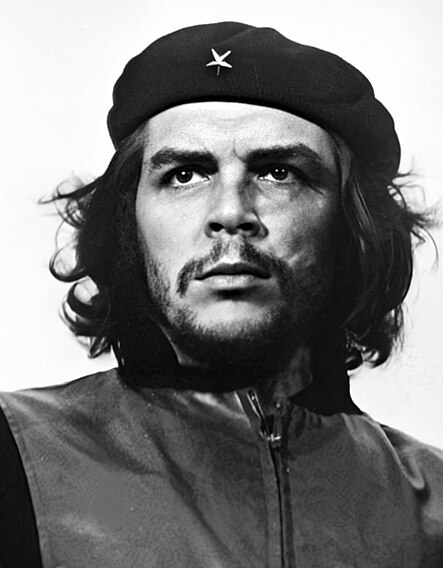
Date     Photo taken on 5 March 1960;
Source     Museo Che Guevara, Havana Cuba
Author     Alberto Korda Copyright

Che's beret-clad and bearded head has been said to be the most repoduced image in the world.  It seems that given his success as revolutionary, that Che as symbol, the Che of the rock t-shirts, and flags adorning teenage bedrooms across the world, is a fairly unlikely figure.  Indeed, one might say that he has inspired many more revolutionaries merely through the religious passion that his idol has evoked, more than any actual savvy regarding guerilla war.  In speaking of the Che's portrayal in "The Motorcycle Diaries", Berman notes "the entire movie, in its concept and tone, exudes a Chistological cult of martyrdom, a cult of adoration for the spiritually superior person who is veering toward death - precisely the kind of adoration that Latin America's Catholic Church promoted for several centuries, with miserable consequences."  The romantic ideal of Che as martyred revolutionary will probably never be excommunicated from the public mind.
"Che Guevara Monument and Mausoleum_Cuba 224" By James Emery.  License
Attribution Some rights reserved by hoyasmeg

Wednesday, October 17, 2012

White Feathered Zeal: Accosting Shirkers in the Great War

In 1915, problems meeting the manpower commitments of the Borden government were quickly discovered by the Canadian army.  Jack Granatstein and JM Hitsman noted in Broken Promises(Oxford: 1977), their fundamental account of conscription in Canada, that standards were quickly lowered when men failed to flock to the recruiting stations.  Medical standards were reduced, the height restriction dropped an inch down to 5'2", minimum chest measurements were decreased, and married men no longer needed permission from their wives to enlist. (p.35)

Chief Justice TG Mathers noted that the strongest motivation to serve was the social pressures put on Western men who were still strolling  civvy-street.  Mathers, a Manitoban pro-conscriptionist, noted that
It is absurd to speak of enlistment at the present day as voluntary.  In the cities of the West the man who is not in uniform is made to feel that he is a sort of social outcast.  No man who joins the ranks today does so voluntarily.  He does so because he can no longer resist the pressure of public opinion.  (Granatstein, p. 38)
 Pierre Van Paassen NYPL th-60174
Patriotic souls took it upon themselves to organize pressure against those not yet serving.  Some women would search for workers and offer to take their place on the job if they would join the army.  As Granatstein noted, "often these patriotic ladies could get carried away."  The memoirs of Pierre van Paasen, a dutchman living in Toronto, testify to the fervour with which shirkers were sought out:
One afternoon I was accosted on the rear platform of a streetcar by a woman, who was dressed in mourning.  She told me that three of her sons had been killed at the front.  She showed me their photographs.  Suddenly she began to talk very loudly.  'Why aren't you in khaki?' She demanded.  'Why do you dare to stand there laughing at my miser? Why don't you go over and fight? Fight, avenge my boys!' she screamed.  'Madam,' I tried to calm her, 'I am not a Canadian.'  That remark set her yelling at the top of her voice.  She screamed that she, the mother of three heroes who had died for their king and country, had been insulted by a foreigner, a slacker, a German spy, a Red, and I don't know what else.
City of Toronto Archives      Fonds 1231, Item 508a
    Close up of 508, T.S.R. Car No. 6
   November 22, 1916
I pulled the cord to bring the street car to a halt.  I alighted. But the woman followed me off and she kept up her screaming about spies and Germans.  A crowd gathered....Somebody stopped me just at the moment when I thought of taking to my heels as the best way out of the predicament.  I was immediately surrounded by a mob.  A group of business men, who had managed to stay five thousand miles away from where the poppies grow, and who were at that moment emerging from the hotel, gallantly rushed to the woman's aid and forced me to submit, as she pinned a white feather through my coat into my flesh: the badge of white-livered cowardice. The last I saw of her was through a pair of badly battered eyes as she laughingly picked up some of the feathers which had dropped from her bag in the scuffle.
...The following day I enlisted.  (Cited in Granatstein, p. 39)
City of Toronto Archives Fonds 1244, Item 687
Title Mother of military personnel, World War I
Date(s) of creation of record(s)        [ca. 1916]
When in 1917, the Borden government finally acknowledged that the robust commitments of Canadian troops would necessitate conscription if the war were to continue grinding on, the position of Canadian women was far from clear-cut.  The attitude of women whose sons were still in Canada would, of course, be much different from that of the mourner Paasen encountered.  In February 1917, the journal Everywoman's World had organized a "woman's parliament", which stated that a 6:1 ratio of members were against compulsory service (Granatstein, p. 80).  The national women's organizations were broadly in support of Union government and conscription, but one should not assume this meant that half the nation's population to have a unanimous opinion on the matter.  The women's groups of feminist legend may not have had the influence on public opinion that historians at times ascribe to them.  It does seem clear, however, that women whose sons were lost in the war were given a status which was leveraged to promote conscription and shame "shirkers".

Tuesday, October 16, 2012

Swamp Insurgency: Fighting Seminole Guerrillas in Nineteenth Century

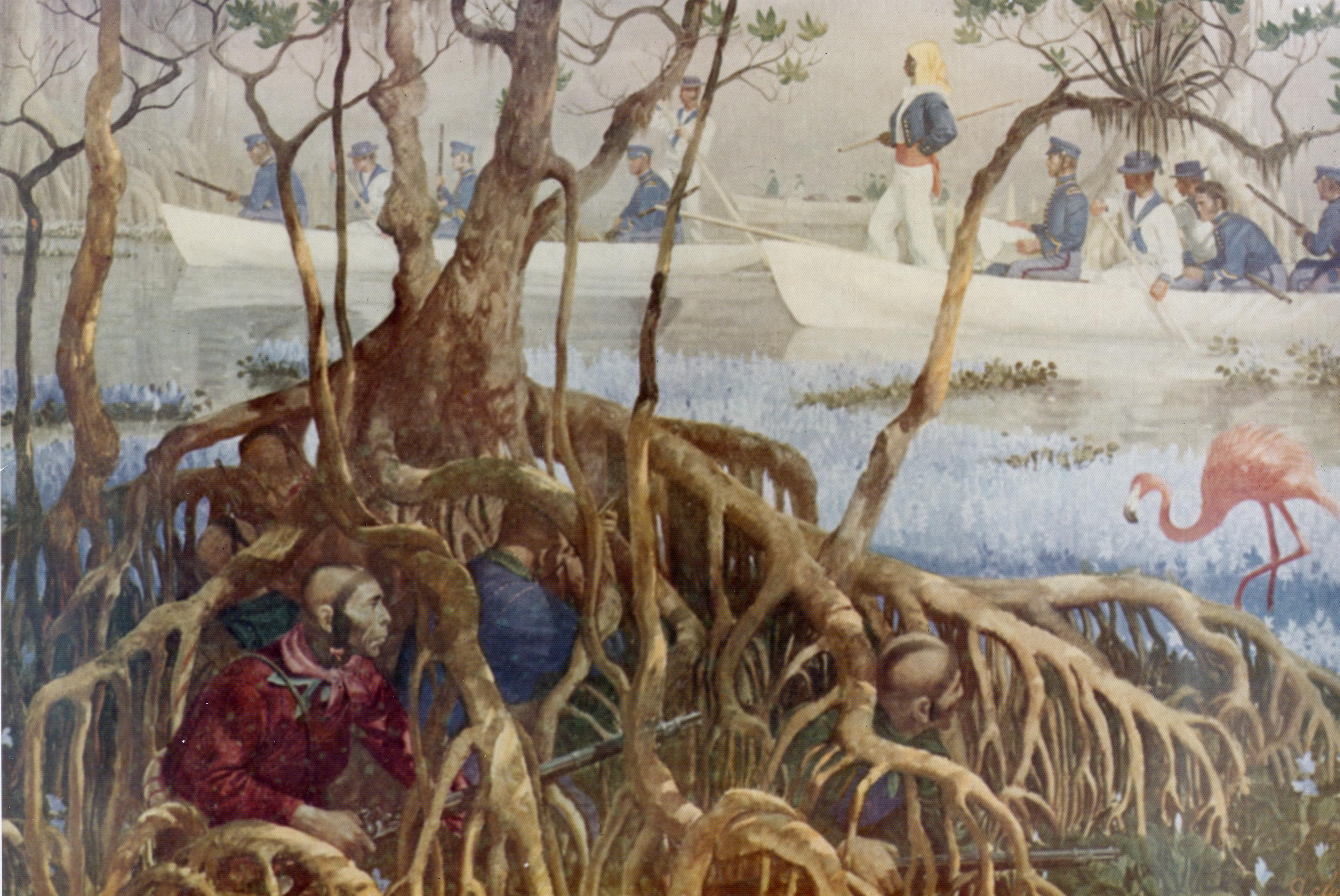
The Seminole Wars show the problems that a conventional army can encounter when their enemies adopt guerilla tactics. Ian Beckett, in his survey work Modern Insurgencies and Counter-insurgencies(Routledge, 2001) describes the Seminoles as “particularly skillfulopponents” of the United States Army. (p.29)  Throughout the first half of the eighteenth-century, skirmishes, ambushes, and raids typified a conflict, where American's had as much trouble finding their enemies as defeating them on the battlefield.

The Seminoles were largely Lower Creek people which had been driveninto Spanish Florida, with other members from the Oconee, Yuchi, Alabama, Choctaw and Shawnee tribes. By the mid eighteenth century, familial links had also been made to runaway slaves which had found refuge in Floridian villages.  Their name has been variously suggested to derive from the Creek word simano-li, meaning "separatist" or "runaway", or the Spanish terms cimarron, for "wild" or cimarrones for "rebel" or "outlaw".  When Spain re-acquired Florida from Britain after the American Revolution, Spanish colonists, and American settlers alike aimed to settle in the area, coaxed in part by Spanish land grants.  Seminoles were allowed to take up land grants as well, as Spain hoped they would form a divide between the Spaniards and Americans.
Marines battle Seminole Indians in the Florida War--1835-1842. Defense Dept. Photo (Marine Corps) 306073-A

Causes for American-Seminole violence may relate to older British tactics of using Seminoles against American settlers.  In the war of 1812 the Seminoles had supported Britain.  Harbouring runaway slaves was one offence that later caused the Americans to seek punitive justice against the tribe.  Beckett suggests the First Seminole War (1816-18) was largely motivated by the need to fight back against Seminole raiding partiesElsewhere, the murder of several Georgia families by chief Neamathla has been suggested as the event that sparked the conflict. General Andrew Jackson invaded Spanish Florida with around 3,000 soldiers and pushed the Seminoles further south.  Jackson dispersed villagers, burnt towns and seized Pensacola and St. Marks.  The Seminoles, in turn, conducted hit and run attacks on towns and plantations.  American ambitions for control of the peninsula were another casus belli, and in 1819, Florida was ceded by Spain to the United States

In 1823 a large reservation was established for the Seminoles, but this four million acre tract was not to remain a sanctioned home for long. In 1830, with Jackson as president, the Indian Removal Act become law. The United States governments attempts to remove all Indians west of the Mississippi into "Indian Territory" was accepted by some leaders who signed the Treaty of Payne's Landing in 1832.  Others refused to leave and moved deeper into the Everglades.

Oseola (As-se-he-ho-lor, Black Drink),
 a Seminole; bust-length, 1837. 
 
The treaty of 1832 allowed for three years for the Seminoles to move west, and in 1835 the stage was set for conflict with the hold-outs.  In December 1835, a 108 man detachment of Major Francis Dade’s forces was ambushed in the Wahoo swamp of the Withlacoochie River. A contemporary heritage website notes that, "As Major Francis Dade marched from Fort Brooke toward Fort King, 180 Seminole warriors led by Micanopy, Alligator and Jumper attacked. Only one man of that army detachment survived the ambush."  That the Seminole War was "the fiercest war waged by the U.S. government against American Indians", would presumably be contested by some historians.  Florida Heritage claims that more than  1500 American soldiers died in the conflict.
The action would begin the Second Seminole War (1835-42), which would see a series of frustrating actions for American generals.  The Seminoles crossed the Georgia border constantly and established safe havens in the Okefenokee Swamp.  Megan Kate Nelson quotes Ware County militia commander Thomas Hilliard who complained in 1836 that the Seminoles, "go concealed as much as possible, and are committing depredations continually, robbing our corn fields and killing our stock."  Seminoles destroyed numerous sugar plantations in Florida, crippling the industry and freeimg numerous slaves.  In February 1836, Major General Edmund Gaines' force of over 1,000 men was besieged and forced to retreat.  Subsequent generals fielding even more troops could not even find the enemy.  Campaigning in the summer months was difficult due to torrential rainfall and disease.

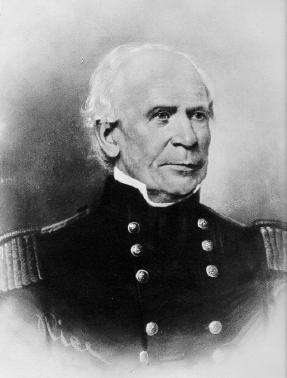
One noteworthy exception to American defeat is found in the campaign of future president Zachary Taylor, who benefited from the Seminoles abandonment of guerrilla tactics. At Lake Okeechobee in December of 1837, the Seminoles defended a fixed position in the everglades, and the Americans triumphed. The tribe did not make the mistake again, and Taylor’s counter-insurgency techniques divided the area and patrolled from outposts. It may have been racial conceptions of superiority which led American forces under General T.S. Jesup to ignore military custom and capture leader Osceola while under a flag of truce.  Osceola died in confinement several months later.  Meanwhile, Taylor destroyed crops and removed livestock, to little effect, and Taylor’s war continued until April 1840 when he asked to be removed from his command.  Jesup had some successes establishing forts and using mobile columns to sweep the country.

Thomas Sidney Jesup (1788–1860), 

As Beckett notes the war ended in 1842, not through any military success, but “largely by the army announcing it was over.” (p. 29) While 3800 Seminoles had been removed, there remained 500 guerrillas left in the swamps. The Third Seminole War (1855-58) reduced this number to mere 100 who continued to hide out in ever more remote areas of the everglades. Beckett suggests that the Americans little learned very little about counterinsurgency these early actions.

Friday, October 12, 2012

Banff's Bison: Hooked horns history in Banff National Park

The bison is the iconic symbol of the West, and its associations with a bygone romantic age has long been capitalized upon by boosters, promoters, and the tourist industry.  In the early days of Rocky Mountains Park, (which would officially be renamed Banff National Park in 1930), bison were displayed by the railway in a deliberate effort to evoke feelings of nostalgia and awe over the wilderness.  As Pauline Wakeham argues in Taxidermic Signs (University of Minnesota, 2008), bison were kept as "another railside attraction that catered to the CPR's promotional agenda of enabling tourists to encounter wildlife from the safety and comfort of their coach or car." (p.52)


Whyte Museum V263 / NA - 2966     Buffalo
Animal paddock at Banff
[between 1903 and 1942]     Byron Harmon fonds
Byron Harmon (Banff, Alberta)
In 1898, a 300 acre paddock for nineteen bison was established between the Banff townsite and Cascade mountain.  Within a decade the numbers had expanded to seventy-nine bison and a host of roaming ungulates along with lynx, raccoons, and porcupine kept in cages.  Problems in these early years of the paddock included lack of pasturage and blockage of migration routes through the Bow Valley.   Restriction of the animals inside the paddock made for easy hunting for coyotes sneaking under the wire, which in one year killed seven deer.

In 1907, these problems, combined with concerns of tourist access, prompted a change in the display of animals in the park.  On the grounds of the Banff Park Museum, a "zoological garden" was established to house the animals safely.  The park superintendent's report of 1906 notes the added bonus of ease of access.  "Cages constructed of cement and iron...would be...much more convenient for visitors to the museum.... I am strongly of [the] opinion ...that in a few years the zoological gardens should become one of the leading attractions for visitors to this portion of the National Park." (Wakeham, p. 53)


Whyte Museum V263 / NA - 2906
   97. Polar bear, zoo Zoo at Banff
[between 1903 and 1942]
  Byron Harmon fonds
Byron Harmon (Banff, Alberta)
While originally designed to display a selection of the abundant local wildlife, the zoo expanded to include exotic Mexican squirrels, a Mongolian partridge and even, in 1913, a polar bear. In these acquisitions Wakeham views the zoo as serving a "doubled colonialist function: while it enabled tourists to encounter frontier wildness as a controlled spectacle, thereby dramatizing civilization's mastery of the west, it simultaneously symbolized the Dominion's enduring connection to empire and 'the conquest of all distant and exotic lands.'" (Wakeham, p.53) Wakeham is particularly disturbed by the curious conservationist justification for keeping animals in the zoo and collecting their taxidermic counterparts in the Banff Park Museum.  She argues that these animals served as metonyms for the bountiful animal populations associated with the western frontier.  Paradoxically, the animals distanced the viewer from wildlife, heightening the animal's absence from the surrounding environment.  As Susan Willis argued,
zoo animals are body doubles, stand-ins for the real animals existing (or becoming extinct) elsewhere.  Visit a zoo and you walk through a living cemetery of all that is diminishing, disappearing, and soon to be gone.  Look at the animals...they are living taxidermy." (Quoted in Wakeham, p. 56)

V469 / 2792     Banff National Park Museum
Pertains to Government Museum, Banff
[ca.1918]     George Noble fonds
The animals in Banff, however, had more than a symbolic connection to taxidermy.  The Banff Park Museum, like many other Victorian natural history museums, featured stuffed animals which sought to educate and entertain visitors.  While a rhetoric of preservation surrounding these "artifacts", Wakeham argues that, "the traffic in animal bodies that connected the spaces of the natural history museum, the paddock, and the zoo hinged upon the consumption rather than conservation of nature." (p. 57)  This interconnection of these sites is highlighted in the superintendent's report of 1904.  "A fine four-year-old was killed in June last [year] while fighting with another bull. His head has been mounted, and now adorns the walls of the museum, where it attracts the attention of admiring visitors." (Quoted in Wakeham, p. 57)  In 1908, an elk that died while fighting and a bison which succumbed to pneumonia were also added to the museum's specimens.

While the Banff zoological gardens were closed in 1937, when the expansion of urban zoos across the world made the site seem out of place, the paddock continued to operate until 1997.  Then it was determined that the paddock, (along with an airstrip, horse corrals, and army cadet camp) were impededing wolf and bear migration between the Vermillion Lakes and the Cascade Valley.  The last ten bison were moved to Elk Island Nation Park in October, 1997. (Wakeham, p. 59)


Pauline Wakeham,
 Taxidermic Signs, (2008)

These animal's eventual demise, while not proven by irrefutable evidence, serves as a surreal post-script to the macabre story of animal display in the park.  Wakeham noted that when the bison were transferred to Elk Island, Parks did not intend these beasts to chew cud happily there until the  end of their days.  The herd was instead to be sold off, with the profits returned to Parks Canada.  Wakeham writes,
While the trail of Banff's bison becomes somewhat hard to track after this point, evidence suggests that the animals were purchased by the Oil Sands magnate Suncrude for display on the environmentally 'reclaimed' land north of Fort McMurray.  Although the 'Bison Viewpoint' just outside the borders of Suncrude's current mining sites deploys the animals as a symbol of ecological regeneration in the wake of industrial apocalypse, the herd has suffered form anthrax and tuberculosis due to environmental mismanagement.  Rather than constituting a triumph for conservationism, the closure of the Banff paddock set in motion further traffic in animal bodies that perpetuated the exploitation of wildlife. (Wakeham, p. 59)
A contemporary group, Bison Belong, wish to reintroduce bison into the park, and presumably would take issue with Wakeham's post-colonial critique.  While their plan would include the use of bison fencing to give the animals a much larger area to roam than the old paddock, Wakeham would still take offence to management of animals in this way.  Problems with disease, and visitor safety work against the group, but great demand for the bison may enable these to be surmounted.  Should the plan go through, however, it is highly unlikely that the heads of these woolly beasts will be hung in the Banff Park Museum.

Wednesday, October 10, 2012

General James Dickon's Indian Liberating Army

"General" James Dickson, the so-called "Liberator of the Indian Nations", is a curious character, who goes down in Western Canadian history as a fleeting sojourner with more passion than sense.  Dickson's lineage is vague, but he has been claimed to be the "mixed-blood son of a British trader and Toto-win, sister of Sisseton Sioux Chief Red Thunder."
 [1](Thomas Ingersoll, To Intermix with Our White Brothers , p. 104) 
The governor of the Hudson's Bay Company, George Simpson described him as "covered with huge whiskers and mustachios and seamed with sabre wounds."  Elsewhere it has been noted that,
a bizarre character appeared in fashionable circles in New York and Washington in the winter of 1835-36, endeavoring, as he then said, to secure recruits to aid the Texans in their struggle for independence.  He called himself General James Dickson and told fascinating stories of his life in Mexico and of his service in the Texan army. His striking military dress and a very nice attention to the amenities of social life secured recognition for him but seem to have brought him few recruits.
(Nute, p.352)
Dickson's claim to fame was an attempt at gathering support for the establishment of a indigenous state stretching from Rupert's Land to Texas. 
Banner from Martin McLeod's "Attestation Papers", Nute

In 1836, Dickson recruited around thirty men from Montreal to join him in his quest.  All were apparently made officers in his army, and granted dress uniforms complete with "showy uniforms and glittering epaulettes."
(Lyman C Draper)
George Simpson would call these men, "wild thoughtless young men of good education and daring character, half-breed sons of gentlemen lately and now engaged in the fur trade."
  (Jennifer Brown, Strangers in Blood, p.190) 
Elizabeth Arthur, writing for the Dictionary of Canadian Biography, noted that he may not have told these recruits the full story of his plans to travel to Santa Fe, New Mexico, attack the fort and continue on to California, where he would establish a "utopian state in which Indians would hold all the property and where only a few white officials would be permitted."
McLeod County Minnesota.  Wikipedia.

One of Dickson's party was Martin McLeod, whose diary has survived the years.  McLeod was born near Montreal, but would later become a member of several councils in the Minnesota territorial legislature.   His presidency of the fourth council may be the reason why McLeod County, Minnesota was named for him.  Once in Minnesota, he would long function as a booster for the area, writing Canadian newspapers in praise of Minnesota.
 (Grace Lee Nute ed., The Diary of Martin McLeod, Aug 1922)

As McLeod made his way from Montreal to meet Dickson, he traveled Lake Ontario to Toronto, where he spent the day.  From his diary entry of 20 July 1836, it may be said that he did not enjoy his stay:
Remained one day at Toronto, do not like the place.  Saw Al[exander] Robertson of Inverness (an acquaintance at Montreal).  People kind enough apparently, but I think some what pompous.  Why?  God only knows.  What have they to bost of.  Their town or city (as I believe it is call'd) is a muddy hole - but then it is the Capital of [Upper Canada] and they are up to their ears in politics (damn politics) and they have Sir [Francis Bond Head] (whom by the by I saw a cheval) who is very popular &c &c and all that, so you see they are a people of some consequence, and not to be sneezed at, - that is if the d-------d stench of their town would allow a person to take his finger from his nasal organ long enough for that pleasant exercise.
(McLeod, p.355)
It was in Black Rock several days later that McLeod would meet General Dickson.  McLeod seemed slightly skeptical of the "General's" abilities noting that Dickson,
privately, informed me of his plans &c relative to the intended expedition to the north via  the great lakes and onwards God only knows where; and where and when it may end.  D[ickson] appears quite sanguine of success. As yet I know little of the man, but if I may judge from so short an acquaintance, he is some what visionary in his views - n'importe I wish to go north & westward and will embrace teh opportunity, but must "look before I leap."
(McLeod, p.359)

As Dickson had learned of Cuthbert Grant and the militant abilities of the Métis, he intended to gain recruits for his army in Red River.  He set out from Buffalo with only sixty of the 200 men that were initially proposed for the force.  As they had no money or supplies to speak of, they resorted to stealing and slaughtering some cattle near Detroit.  Unfortunately a sheriff's posse caught up with them, and they were made to pay a fine after some tricky negotiating.

The traveling was hard, and made particularly difficult by Dickson's questionable command decisions.
 (Anne Hyde, Empires, Nations, and Families, p.132)
Dickson could not help the damage done by a storm to their schooner on the Great Lakes which almost swamped them, but his decision to press ahead of his party in northern Minnesota without adequate supplies was highly questionable.

On the 27th November 1836, McLeod noted the difficulties crossing Cass Lake after the winds had polished the ice.  The party travelled 30 miles that day.  The next day McLeod noted, "Obliged to rest as a number of the party are unable to proceed from the fatigue of yesterday's march and the bruises which they received from frequent falls upon the ice. Indeed all our men were so "done up " that they did not arrise yesterday till near dark."
(McLeod, p. 388)

It was when the party's Sioux guides left them on the 9th of December, that Dickson's leadership began to crumble.  They had left Thief River that day and were still around a week's walk to the Red River settlement, yet were not at all familiar with the open prairie.  As McLeod wrote in his diary:
Saturday 10th Decr At day break we were summoned together,and informed by Gen1 D[ickson] that as our guides had desserted and as we had but five days provisions, and had yet to travel near three hundred miles in a strange country of which we had not an accurate map, he left us all to act, each man for himself, to either follow him, as it was his determination to trust to fortune and push forward, or return to Red lake and there wait untill they could procure a guide. I had previously made up my mind to continue my route at every risk, and all the rest with the exception of two preferring to follow Gen1 D., we made immediate preparations to start.
It was several days later that Dickson left the main group without blanket, food, nor means to light a fire. Dickson arrived in Red River, starving and frost-bitten.  As Lyman Draper noted, "the cold weather set in before their arrival at Red river [sic], and Dickson had his toes frozen off, which crippled him as well as the whole enterprise."
  (Draper) 


Sir George Simpson, Governor of the
 Hudson's Bay Company, 1857.
Credit: Library and Archives Canada, Acc. No.
1978-14-3 Source: Manuscript Division,
 W.W. Campbell Collection (MG30 D 8)
Governor Simpson was none too amused with the party, refused his bank drafts and quickly employed the men who had been recruited.  Several of Dickson's recruits were in fact the mixed-blood sons of HBC officials.  Their sense of adventure was probably supplanted by their common sense, after the hard travelling in the company of Dickson.  In the spring of 1837, the Indian Liberator left Red River, incredibly, worse off for resources than when he arrived.
 (Pannekoek, Snug Little Flock, 90).
  As Grace Lee Nute put it in 1922, "America has been the land of roseate dreams; but, among all its visions of wealth and power, where is the equal for novelty and adventure of this mad product of Dickson's disordered mind?"
 (Nute, 352)